
What Is the Menstrual Cycle?
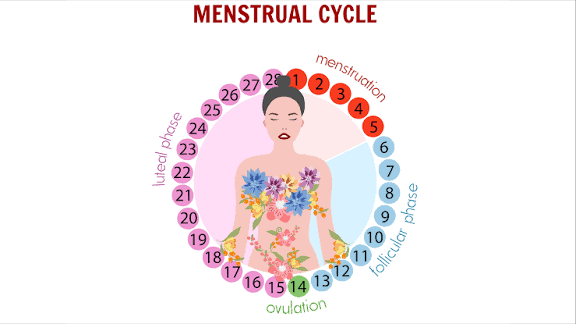
The menstrual cycle is the series of hormonal and physical changes that happens in the body between one menstrual period and the next. In Kinyarwanda, the menstrual period is commonly called 'imihango'.
The cycle is counted from the first day of menstrual bleeding (Day 1) to the day before the next period begins. So if your period starts on 1 September and your next period starts on 29 September, your cycle length is 28 days.
The menstrual cycle prepares the body for a possible pregnancy. An egg develops and may be released from an ovary, while the lining of the uterus becomes ready for a possible pregnancy. If pregnancy does not occur, that lining is shed as menstrual bleeding.
Your menstrual cycle is also useful information about your health. A change in your usual pattern can sometimes be the first sign of pregnancy, hormonal changes, thyroid problems, polycystic ovary syndrome (PCOS), significant weight change, stress or another health condition.
What Is a Normal Menstrual Cycle?
There is no single menstrual pattern that is normal for everyone. The length and symptoms of a cycle can vary from person to person and can change over time.
- Cycle length in adults: commonly about 21 to 35 days.
- Menstrual bleeding: commonly lasts about 2 to 7 days.
- The amount of bleeding can vary, and flow is often heavier during the first few days.
- A difference of a few days from one cycle to another can be normal.
- Teenagers often have more irregular cycles during the first few years after their first period.
- The famous 28-day cycle is an average, not a requirement for a healthy cycle.
The Four Main Phases of the Menstrual Cycle
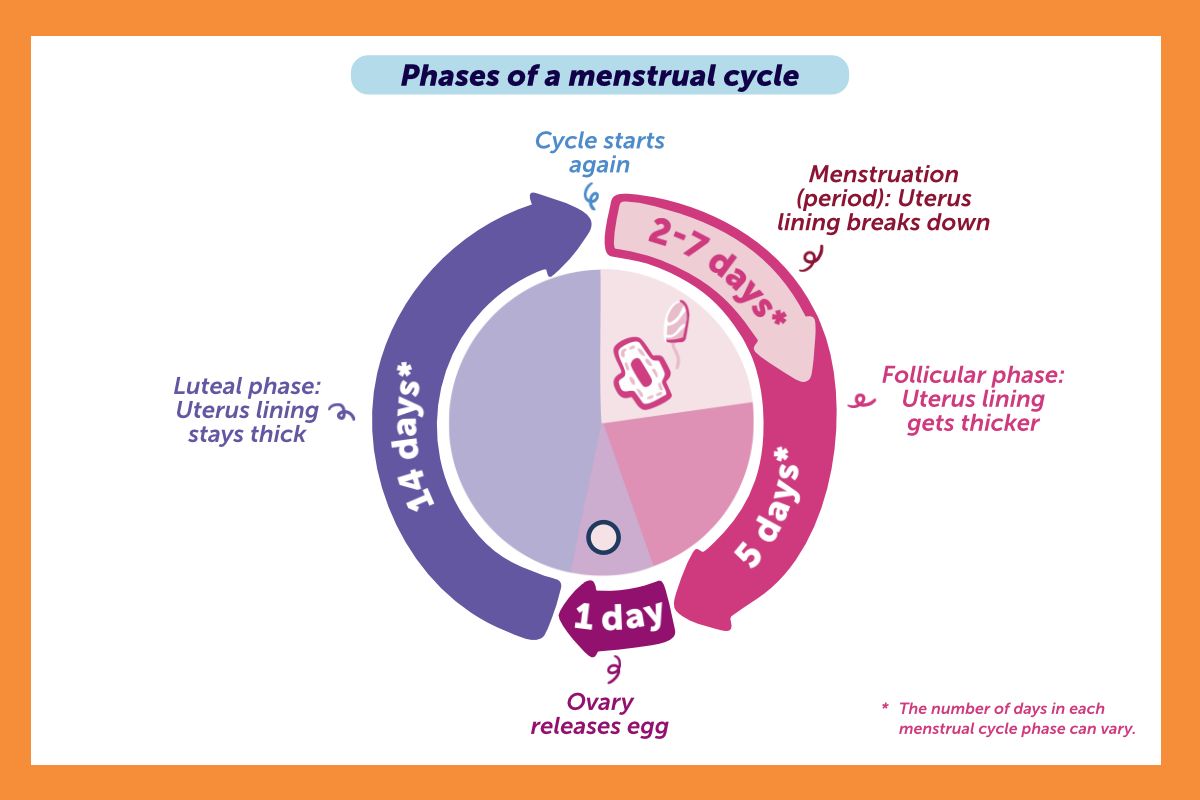
Although the cycle is continuous, it is commonly described in four phases. The timing of these phases varies from person to person.
- Menstruation: the uterine lining is shed, causing menstrual bleeding.
- Follicular phase: follicles in the ovary develop and estrogen rises. The uterine lining begins building up again.
- Ovulation: an egg is released from an ovary. This is the time when pregnancy is most likely if sperm are present.
- Luteal phase: the body prepares for a possible pregnancy. If pregnancy does not occur, hormone levels fall and another period begins.
Ovulation: When Does It Happen?
Ovulation is the release of an egg from an ovary. Pregnancy is most likely when sperm are present around the time of ovulation.
A common misunderstanding is that everyone ovulates on Day 14. That is only a useful approximation for a 28-day cycle. Ovulation generally occurs about 12 to 16 days before the next period, although the exact timing can vary.
This is why someone with a 30-day cycle may ovulate later than someone with a 24-day cycle. Even someone whose cycles are usually regular can occasionally ovulate earlier or later than expected.
The Fertile Window: When Can Pregnancy Happen?
Pregnancy does not only happen when sex occurs exactly on the day of ovulation. Sperm can survive in the reproductive tract for several days, while an egg remains available for fertilization for a much shorter period after ovulation.
For this reason, the fertile window includes several days before ovulation as well as the day of ovulation. The exact fertile window varies because the day of ovulation can change from one cycle to another.
Changes in cervical mucus can provide a useful clue. Around ovulation, vaginal mucus may become clearer, wetter, slippery and stretchy, sometimes resembling raw egg white.
Ovulation predictor kits can also help identify the hormonal surge associated with ovulation. They are useful for people trying to become pregnant, but they do not provide guaranteed protection against pregnancy.
A Simple Example: A Person With a Regular 28-Day Cycle
Let's make this practical. Imagine Aline, whose menstrual cycles are usually very regular and last about 28 days. Her period starts on 1 September. That is Day 1.
If her cycle remains 28 days, her next period would be expected around 29 September. Ovulation might occur around the middle of the cycle, approximately Day 14, or around 14 September. But this is only an estimate.
Because sperm can survive for several days, sex during the days before ovulation can also result in pregnancy. Therefore, Aline's potentially fertile period would include several days before and around ovulation rather than only Day 14.
| Approximate cycle days | What may be happening | Pregnancy possibility |
|---|---|---|
| Days 1–5 | Menstrual bleeding is occurring. | Pregnancy is less likely for many people, but not impossible. |
| Days 6–8 | The follicular phase continues and the body prepares for ovulation. | Pregnancy may be possible, especially if ovulation occurs earlier than expected. |
| Days 9–15 | Around the estimated fertile window for this example. | Higher possibility of pregnancy, especially around ovulation. |
| Around Day 14 | Estimated ovulation in a typical 28-day example. | One of the most fertile times. |
| Days 16–28 | The luteal phase follows ovulation. | Pregnancy may still be possible if ovulation occurred later than expected. |
So, if Aline asks, 'Which days are completely safe for unprotected sex?', the medically honest answer is: there are no guaranteed safe days based only on the calendar. Her estimated fertile days can help her understand her cycle, but they should not be treated as a guarantee against pregnancy.
If Aline is trying to become pregnant, having sex regularly during the days leading up to and around ovulation can increase the chance of pregnancy. If she is trying to avoid pregnancy, she should use a reliable contraceptive method rather than depending only on the calendar.
What If Your Cycle Is Not 28 Days?
A 28-day cycle is only one example. If your cycle is shorter or longer, the estimated ovulation day can change.
For example, someone with a 24-day cycle may ovulate earlier than someone with a 30-day cycle. The important point is that ovulation is better understood in relation to the next period rather than assuming that everyone ovulates on Day 14.
Even if your cycles are usually regular, illness, stress, travel, changes in sleep, weight changes, breastfeeding and other factors can sometimes shift ovulation.
| Usual cycle length | Approximate ovulation timing | Why this is only an estimate |
|---|---|---|
| 24 days | Often around Day 10 | Ovulation can occur earlier or later. |
| 28 days | Often around Day 14 | This is an average example, not a guarantee. |
| 30 days | Often around Day 16 | The actual day can vary between cycles. |
| 32 days | Often around Day 18 | Calendar estimates become less reliable when cycles vary. |
Can You Get Pregnant During Your Period?
Yes. Pregnancy during menstruation is less likely for many people, but it is not impossible.
This can happen if someone ovulates early, particularly when cycles are short, because sperm can remain alive in the reproductive tract for several days. Sex near the end of a period can therefore overlap with an early fertile window.
If you do not want pregnancy, do not assume that menstrual bleeding automatically protects you from pregnancy.
How to Track Your Menstrual Cycle
Tracking your cycle can help you understand your usual pattern and notice changes. You can use a notebook, calendar or period-tracking app.
- Record the first day of each period.
- Record how many days the bleeding lasts.
- Note whether the bleeding is light, moderate or heavy.
- Record significant pain, unusual discharge or other symptoms.
- If you notice possible ovulation signs, such as clear stretchy cervical mucus, you can record them too.
- Continue tracking for several months so you can see your usual pattern.
Bring your records to a healthcare appointment if your periods become irregular, painful, unusually heavy or absent. Your cycle history can help the clinician understand what has changed.
Tracking Your Cycle When Trying to Get Pregnant
Cycle tracking can be helpful when trying to conceive because pregnancy is most likely around ovulation.
For someone with regular cycles, estimating the fertile window can help identify when sex is more likely to result in pregnancy. Cervical mucus changes and ovulation predictor kits can provide additional information.
However, calendar predictions are estimates. If you are trying to conceive, regular sex every few days throughout the cycle is also a practical approach rather than trying to identify one exact 'perfect day'.
If you have been trying to become pregnant without success, our fertility guide explains when an assessment may be appropriate.
Tracking Your Cycle When Trying to Avoid Pregnancy
Tracking your menstrual cycle can teach you when pregnancy may be more likely, but calendar tracking alone is less reliable than many people assume.
The fertile window can move because ovulation is not fixed to one calendar day. A person may therefore become pregnant after unprotected sex on a day they believed was 'safe'.
If preventing pregnancy is important, consider a reliable contraceptive method such as oral contraception, an implant, injectable, IUD or condoms. Our contraceptive pill guide explains one of these options in detail.
Premenstrual Symptoms
In the days or weeks before a period, some people experience premenstrual syndrome (PMS). Symptoms can vary from month to month and from person to person.
- Bloating
- Breast tenderness
- Headaches
- Food cravings or appetite changes
- Feeling more tired
- Irritability
- Mood changes
- Spotty skin
- Changes in sleep
Regular physical activity, adequate sleep, balanced meals and stress management may help some people. If symptoms become severe or repeatedly interfere with work, school, relationships or daily life, talk to a healthcare professional.
What Can Make Your Period Late or Irregular?
A late period does not always mean pregnancy, but pregnancy should usually be considered first when it is possible.
- Pregnancy
- Stress or significant emotional changes
- Illness
- Major weight loss or weight gain
- Very intense exercise
- Breastfeeding
- Starting, stopping or changing hormonal contraception
- Polycystic ovary syndrome (PCOS)
- Thyroid disorders
- Perimenopause
- Certain medicines or other medical conditions
What Should You Do If Your Period Is Late?
If your period is later than expected and pregnancy is possible, a home pregnancy test is a sensible first step. If the test is negative but your period still does not come, repeat the test when appropriate or speak with a healthcare professional.
Do not take hormone tablets or medicines from a friend or pharmacy simply to 'bring on' a period before finding out why it is late.
A healthcare professional may consider pregnancy, PCOS, thyroid problems, breastfeeding, stress, weight changes and other possible causes depending on your history.
Delaying Your Period for Travel, an Event or Another Reason
Some people want to delay a period for a wedding, examination, holiday, sports event, travel or another important occasion.
One medicine that may be prescribed for this purpose is norethisterone, a progestogen. It is usually started several days before the expected period and taken according to the prescribed schedule. Menstrual bleeding commonly begins a few days after the medicine is stopped.
Norethisterone is not appropriate for everyone. Your healthcare provider should check your medical history, including previous blood clots, liver problems and other conditions, before recommending it.
If you already use a combined contraceptive pill, it may be possible to delay withdrawal bleeding by taking active pills continuously rather than taking the usual hormone-free interval. The correct approach depends on the specific pill.
Pills to 'Bring On' a Period
There is no single medicine that should be taken by everyone simply because a period is late. The correct treatment depends on the cause.
For example, a late period caused by pregnancy needs completely different care from a late period caused by PCOS, thyroid disease, breastfeeding or significant weight change.
Taking hormonal tablets without knowing the cause can mask symptoms, delay diagnosis or expose you to unnecessary side effects.
When Is Period Pain Normal, and When Is It Too Much?
Some menstrual cramps are common because the uterus contracts during menstruation. However, severe or worsening pain should not simply be accepted as something everyone has to endure.
Pain deserves medical assessment if it repeatedly prevents you from attending school or work, interferes with normal activities, is becoming worse, or is associated with unusual bleeding, pain during sex, abnormal discharge or difficulty becoming pregnant.
Conditions such as endometriosis, adenomyosis, fibroids or pelvic infections can cause significant menstrual or pelvic pain.
Read our period pain guide for more information.
When to See a Doctor About Your Period
Most changes in the menstrual cycle are not emergencies, but some patterns deserve medical assessment.
- You have gone about three months without a period and pregnancy has been excluded.
- You have not had your first period by age 15, or puberty appears delayed.
- Your cycles are consistently shorter than 21 days or longer than 35 days as an adult.
- Your previously regular periods suddenly become very irregular.
- Your bleeding regularly lasts longer than 7 days.
- You need to change a pad or tampon very frequently because it becomes soaked quickly.
- You pass unusually large blood clots or frequently feel weak, tired, dizzy or short of breath during heavy periods.
- You bleed between periods.
- You bleed after sex.
- You have bleeding after menopause.
- Period pain regularly stops you from normal activities.
- You have a positive pregnancy test with pain or bleeding.
Heavy Menstrual Bleeding
Heavy menstrual bleeding is more than simply having a 'strong' period. It can interfere with daily life and may eventually cause iron-deficiency anaemia.
Signs that bleeding may be too heavy include soaking through menstrual products very quickly, needing to change products during the night, bleeding for more than 7 days, passing large clots, or feeling unusually tired, weak or short of breath.
Heavy periods have many possible causes, including fibroids, hormonal problems, bleeding disorders, some medicines and conditions affecting the uterus. A healthcare professional can help determine the cause.
Period Hygiene: Staying Clean and Comfortable
Menstruation is a normal biological process, not something dirty or shameful. Good menstrual hygiene means having access to suitable menstrual products, clean water, privacy and a safe way to change, wash or dispose of menstrual materials.
- Change pads regularly and sooner if they become wet or full.
- If using tampons, follow the product instructions and do not leave one in longer than recommended.
- Wash your hands before and after changing menstrual products.
- Reusable pads and menstrual underwear should be washed thoroughly and dried completely before reuse.
- A menstrual cup should be cleaned and used according to the manufacturer's instructions.
- Wash the external genital area gently with clean water. There is no need to wash inside the vagina.
- Avoid vaginal douching and putting soaps, herbs or other substances inside the vagina.
- Dispose of disposable menstrual products safely and respectfully.
Menstruation, Exercise and Daily Activities
Having a period does not mean you must stop normal activities. Most people can safely bathe, exercise, work, attend school, cook and participate in everyday activities during menstruation.
Some people feel more tired or experience cramps during their period and may need to adjust their activity temporarily. Listen to your body and seek medical advice if pain or bleeding repeatedly prevents normal activities.
Common Menstrual Myths and Facts
Menstruation is surrounded by many cultural beliefs and misconceptions. Understanding what is medically true can help people make safer decisions about their health.
- Myth: You cannot get pregnant during your period. Fact: Pregnancy is less likely for many people during bleeding, but it is possible, particularly with short cycles or early ovulation.
- Myth: Day 14 is always ovulation day. Fact: Day 14 is only a useful estimate for a 28-day cycle. Ovulation can occur earlier or later.
- Myth: There are completely safe days for unprotected sex. Fact: Calendar calculations cannot guarantee that a day is free from pregnancy risk.
- Myth: A late period always means pregnancy. Fact: Pregnancy is important to rule out, but stress, illness, weight changes, breastfeeding, PCOS, thyroid problems and other factors can also delay menstruation.
- Myth: Period blood is dirty. Fact: Menstrual bleeding is a normal biological process.
- Myth: You should not bathe during your period. Fact: Bathing is safe and can help you feel clean and comfortable.
- Myth: You should not exercise during your period. Fact: Exercise is generally safe, and some people find physical activity helps with cramps.
- Myth: Irregular periods mean you cannot become pregnant. Fact: People with irregular cycles can become pregnant. Irregular ovulation can simply make predicting fertile days more difficult.
- Myth: A medicine used to delay a period also prevents pregnancy. Fact: Norethisterone used for period delay is not a contraceptive.
- Myth: Tampons or menstrual cups determine whether someone is a virgin. Fact: Menstrual products do not determine a person's sexual history or 'virginity'.
Menstrual Health and Emotional Well-Being
Menstrual health is more than the absence of disease. People should be able to understand their menstrual cycle, access appropriate menstrual products and healthcare, and participate in daily life without shame or unnecessary restrictions.
Mood changes can occur around menstruation. However, persistent or severe depression, anxiety, hopelessness or thoughts of self-harm should not simply be blamed on the menstrual cycle. Seek professional help if these symptoms occur.
Women's Health Services at ClinicRW
If your menstrual cycle has changed, your periods are unusually painful or heavy, or you are concerned about fertility, our Obstetrics & Gynecology team can help.
Depending on your symptoms, assessment may include a medical history, physical examination, pregnancy testing, blood tests or pelvic ultrasound. The appropriate tests depend on the individual problem rather than every patient needing every test.
Bring your period-tracking notes or app information to your appointment. Knowing your usual cycle length, bleeding pattern, pain and other symptoms can make the consultation more useful.
Book an appointment online or contact the ClinicRW team for guidance.
Frequently asked questions
What is a normal menstrual cycle?
For adults, a menstrual cycle commonly lasts about 21 to 35 days, with menstrual bleeding usually lasting about 2 to 7 days. A 28-day cycle is an average, not a requirement.
What is Day 1 of the menstrual cycle?
Day 1 is the first day of proper menstrual bleeding. The cycle continues until the day before the next period begins.
When does ovulation happen?
Ovulation commonly occurs about 12 to 16 days before the next period, although the exact timing varies. In a typical 28-day cycle, ovulation is often around Day 14, but it does not always happen exactly then.
What are the fertile days in a 28-day cycle?
In a typical 28-day cycle, the fertile period is around the days leading up to ovulation and the day of ovulation. An approximate example is around Days 9 to 15, but this is not a guaranteed fertile window because ovulation can shift.
Which days are safe to have unprotected sex?
There are no guaranteed 'safe days' based only on the calendar. Even someone with regular 28-day cycles can ovulate earlier or later than expected. If you want to prevent pregnancy, use reliable contraception rather than relying only on cycle dates.
Can I get pregnant during my period?
Yes. Pregnancy is less likely for many people during menstruation, but it is possible, particularly if ovulation occurs early or the cycle is short. Sperm can survive for several days, so sex near the end of a period can sometimes result in pregnancy.
Can I get pregnant just before my period?
Pregnancy is generally less likely shortly before a truly imminent period because ovulation has usually already occurred. However, calendar predictions are not perfect, and a later-than-expected ovulation can change the fertile window. If you do not want pregnancy, use contraception throughout the cycle.
Why is my period late if I am not pregnant?
Stress, illness, weight changes, intense exercise, breastfeeding, hormonal contraception, PCOS, thyroid problems and other conditions can delay menstruation. If pregnancy is possible, test first. If you continue missing periods, see a healthcare professional.
How long can a period normally last?
Menstrual bleeding commonly lasts about 2 to 7 days. Bleeding that regularly lasts longer than 7 days should be discussed with a healthcare professional, particularly if it is heavy.
How much menstrual bleeding is too much?
Bleeding may be considered heavy when you need to change menstrual products very frequently, bleed for more than 7 days, pass unusually large clots, or experience symptoms such as tiredness, weakness, dizziness or shortness of breath. Very heavy bleeding may require urgent assessment.
Is it normal to have period pain?
Some cramping is common during menstruation. However, pain that repeatedly prevents you from working, studying or carrying out normal activities, becomes progressively worse, or occurs with unusual bleeding or other symptoms should be assessed by a healthcare professional.
Can I delay my period for a wedding or trip?
Yes, in some circumstances a clinician may prescribe norethisterone to delay a period. It is usually started before the expected period and is not suitable for everyone. Norethisterone is not contraception, so you still need pregnancy protection if you have sex.
Can I take a pill to bring on a late period?
Do not take hormonal tablets simply to make a late period come without first finding out why it is late. If pregnancy is possible, take a pregnancy test first. A healthcare professional can assess causes such as pregnancy, PCOS, thyroid problems, breastfeeding or weight changes.
Can I bathe during my period?
Yes. Bathing is completely safe during menstruation and can help you feel clean and comfortable.
Can I exercise during my period?
Yes. Exercise is generally safe during menstruation. Some people find that gentle or moderate physical activity helps with cramps and mood. If pain or bleeding makes exercise difficult, seek medical advice.
When should I see a doctor about my period?
See a healthcare professional if you have very heavy bleeding, bleeding for more than 7 days, repeated cycles shorter than 21 days or longer than 35 days, severe period pain, bleeding after sex, bleeding after menopause, sudden major changes in your usual cycle, or no period for about three months when pregnancy has been excluded.
Can irregular periods mean infertility?
Not necessarily. Many people with irregular cycles can become pregnant. However, irregular periods can sometimes indicate irregular ovulation or another condition that may affect fertility. If you are trying to conceive, an assessment can help identify the cause.
Sources
- Menstrual health, World Health Organization (2026)
- Periods, NHS
- Periods and fertility in the menstrual cycle, NHS
- Trying to get pregnant, NHS
- Norethisterone, NHS
- Heavy periods, NHS
- Guideline for the prevention, diagnosis and treatment of infertility, World Health Organization (2025)
This article is for general information and does not replace advice from a doctor who knows your health history.
Have questions or want to speak with a specialist?
Book a Consultation