
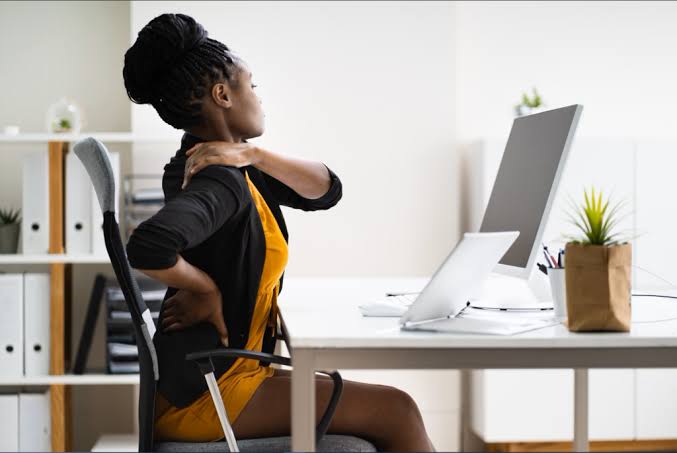
What Is Text Neck?
Your head weighs about five kilograms. When you look straight ahead, your neck carries that weight easily. When you bend your head forward to look at a phone, the load on your neck increases sharply. At a steep angle, the strain on the neck muscles is several times greater than when your head is upright.
Hold that position for hours a day, on the bus, at your desk and in bed, and the muscles of your neck and upper back become tired, tight and painful. Physiotherapists call this pattern 'text neck', and we now see it in students and young professionals as often as in older adults.
Common Signs
- An aching or stiff neck by the end of the day
- Tight, painful shoulders
- Headaches that start at the back of the head
- Pain between the shoulder blades
- Rounded shoulders and a head that sits forward of the body
Set Up Your Workspace Properly
- Raise your screen so the top edge is at eye level. If you work on a laptop, use a stand or a pile of books with a separate keyboard and mouse.
- Sit with your back supported against the chair and your feet flat on the floor.
- Keep your elbows at roughly a right angle and your shoulders relaxed.
- Place the screen about an arm's length away.
- Bring your phone up to eye level instead of dropping your head down to it.
Move Every 30 Minutes
No posture is perfect if you hold it all day. The body is built to move. Stand up, walk to get water, or roll your shoulders at least every 30 minutes. Setting a timer on your phone makes it a habit.
Five Stretches You Can Do at Your Desk
- Chin tucks: sit tall and gently pull your chin straight back, as if making a double chin. Hold for five seconds and repeat ten times.
- Shoulder rolls: roll your shoulders slowly backwards ten times, then forwards ten times.
- Side neck stretch: tilt your ear toward your shoulder until you feel a stretch on the other side. Hold for 20 to 30 seconds on each side.
- Doorway chest stretch: place your forearms on either side of a door frame and lean gently forward until you feel a stretch across your chest. Hold for 20 to 30 seconds.
- Upper back extension: sit in a chair with a firm back, clasp your hands behind your head and gently lean back over the top of the chair. Repeat five times.
When Neck Pain Needs a Doctor
Most screen related neck pain improves with better habits and exercise. Seek medical advice promptly if you have any of the following:
- Numbness, tingling or weakness in your arms or hands
- Pain after a fall or a road accident
- Pain with fever, unexplained weight loss or night sweats
- Severe pain that wakes you at night
- Dizziness, trouble walking or loss of bladder control
How Physiotherapy Helps
If pain keeps coming back, a physiotherapist can find exactly which muscles and joints are involved. At ClinicRW, our Physiotherapy department combines hands on treatment with an exercise programme built around your work and daily routine, so the pain stays away. Book an assessment before a stiff neck turns into a long term problem.
Have questions or want to speak with a specialist?
Book a Consultation